
You Don't Need Another Course. You Need a Plan.
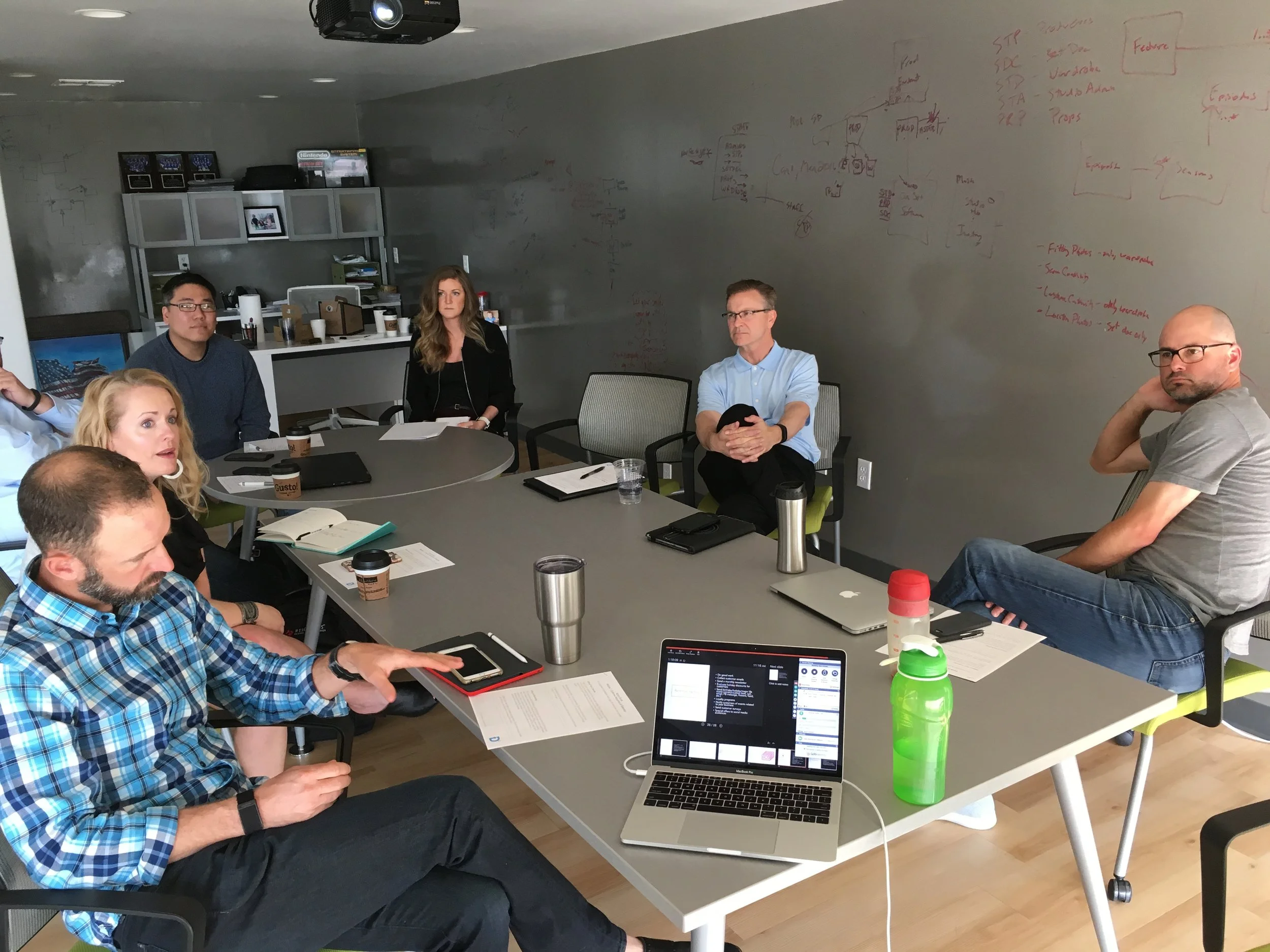
Diffactory Direct circa 2016
In 2016 I felt a pull to teach. I'd paid the dumb tax on enough mistakes that I figured I could help other people skip a few. So we quietly launched a program called Diffactory Direct out of our office in Lee's Summit, Missouri. People drove across town and sat in our conference room. No Zoom. No Skool. No Circle. Just humans in chairs, coffee, and ten modules we'd built ourselves.
I dug up the old recordings recently. They're hilarious. We'd duct-taped the whole thing together – back-end, delivery, follow-up. We were basically building an education platform before education platforms existed.
But here's what I noticed looking back. The content wasn't what made it work. The room did. People showed up because they wanted to be around other people chewing on the same problems. The learning was almost secondary to the connection.
That memory's been rattling around as I've watched the explosion of courses, masterminds, and guru programs over the last decade. There are thousands now. A few are great. Most aren't. And the pattern I keep seeing in the founders I work with is the same: they've consumed a lot of content, joined a lot of programs, collected a lot of frameworks. And they're still stuck.
The information isn't the problem. The implementation is.
Most programs turn founders into information junkies. There's a dopamine hit in learning something new, in feeling like progress while you absorb someone's framework or get three minutes of generic advice on a hot-seat call. But consumption isn't progress. Progress is doing the work. And the work – the unsexy work of building systems and training your team and making the business less dependent on you – needs something courses don't give you: protected time, real accountability, and someone who knows you well enough to call you on your own patterns.
I'm not saying education is useless. I'm saying the bottleneck for most founders isn't knowledge. It's execution. They already know they should document their processes. They know they should train their team to decide without them. They know they should stop being the answer to every question. They've known for years. They just haven't done it – because every morning the business demands their attention again, and the strategic work gets shoved to next week.
This is the burnout trap, and I've lived in it. The numb hustle. The forced smiles. The Sunday dread that starts Friday night. You're not just tired. You're fried. And the worst part is the thing causing the burnout – the business – is also the thing you can't walk away from, because it doesn't work without you.
The usual advice for burnout is self-care. Take a break. Set boundaries. And look, none of that's wrong. But it's treating symptoms. The root cause of founder burnout isn't that you work too hard. It's that your business is built so you have to. Fix the structure and the burnout starts resolving itself.
That's what I mean by a plan instead of a course. A course gives you information. A plan gives you a sequence of moves, specific to your business, that changes how the thing actually operates. It addresses the real problem: you're stuck in the middle of everything, and until you're not, nothing changes.
I also think most founders need people around them who get the weight. Building a business is lonely. Your friends don't fully get it. Your family tries. But carrying payroll, chasing revenue, managing people, and making a hundred decisions a day while quietly wondering if you're doing any of it right – that's a specific kind of heavy. Back in that conference room in 2017, the most valuable moments weren't when I was teaching. They were when one owner looked at another and said, "I thought it was just me."
So when we rebuilt what Diffactory does, we didn't build another course. We built a place where founders do the actual work, together, with real support and real accountability. Not a content library. Not a guru on a stage. A working environment where people show up, face their real problems, and make progress on the stuff that matters.
Less scalable than selling a $497 course to ten thousand people? Yes. Does it actually work? Also yes.
The business-education industry has the same disease as a lot of the businesses it serves: it's optimized for volume, not outcomes. Sell the course, move on, sell the next one. The customer feels good for a week, then slides back into the same patterns. Nobody's accountable. The guru's already onto the next launch.
If you've read a shelf of business books, been through three programs, and still feel stuck in the grind – the issue probably isn't more input. It's doing the work you've been putting off, in a place where someone won't let you keep putting it off.
That's not a course. That's a commitment. And it's the only thing I've seen that actually moves the needle.
Take our assessment. Two questions, really: how's the business doing, and how are you doing. We work on both. About 15 minutes, no pitch – because the gap is rarely knowledge. It's the work you keep meaning to start.