80%
of businesses listed for sale never sell
<50%
Average owner captures less than 50% of potential value
3–5 Years
Exit planning takes 3–5 years done right
Loyal Customers Are an Asset. Concentrated Customers Are a Risk.
Merriam has a dense, loyal small business community — service businesses, retail operations, and professional practices built on long-term customer relationships. That loyalty is genuinely valuable. But when too much revenue runs through too few customers, or when those customer relationships exist because of the owner personally, buyers discount the value significantly. Diversifying revenue and systematizing customer relationships is one of the highest-leverage things a Merriam founder can do before going to market.
Who We Work With in Merriam
We work with Merriam founders running service, retail, and professional businesses generating $250K to $20M. Many have strong repeat revenue and loyal customer bases. The work is making sure that revenue is transferable — documented, systematized, and not dependent on the owner's personal relationships.
- →Retail and specialty service businesses
- →Healthcare and wellness practices
- →Professional and B2B services
- →Trade and home service contractors
- →Insurance and financial services
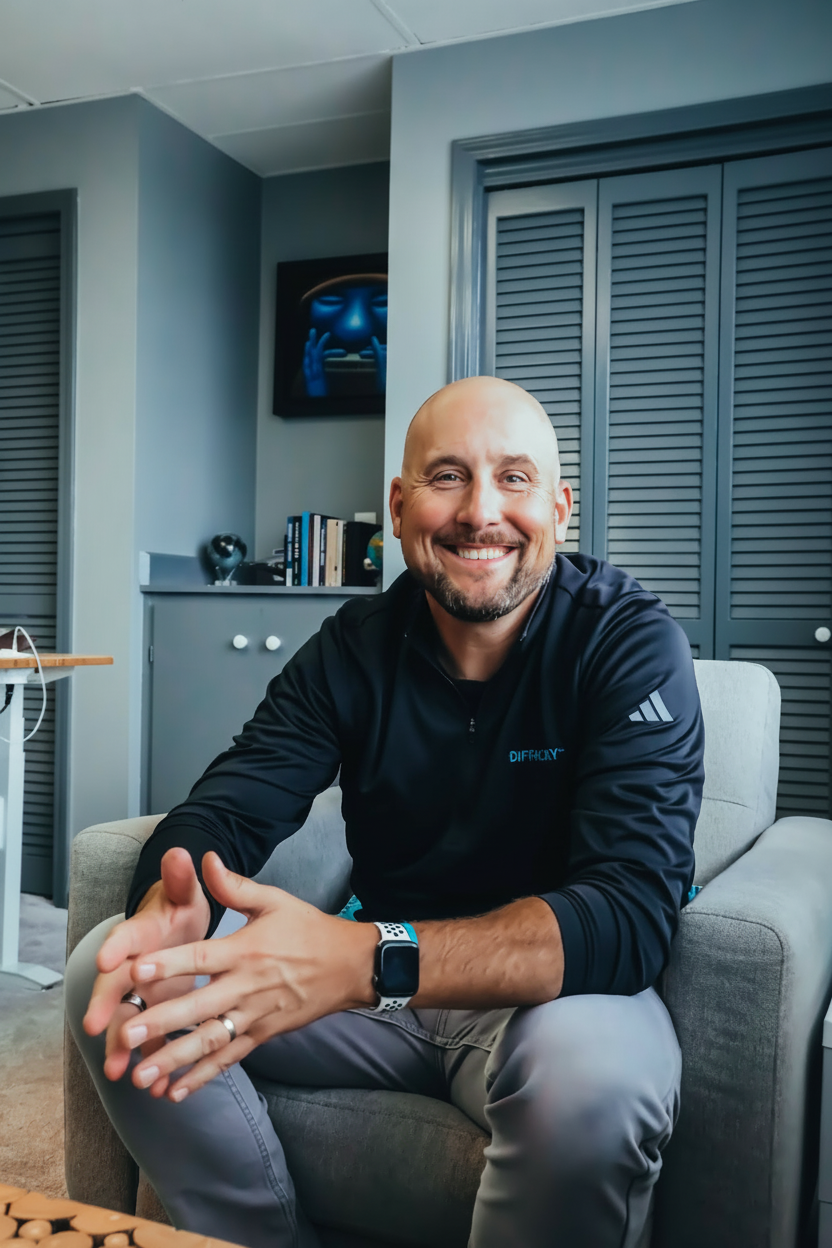
30 Years in Kansas City. I Know This Market.
Kansas City is the biggest small town there is. Everybody knows everybody — in Merriam, in Mission, in Shawnee. I've been in this business community for 30 years. The founders I meet in Merriam have usually built real customer loyalty — the kind that takes years to earn. The challenge is making sure that loyalty transfers with the business and doesn't walk out the door when the owner does.
Kevin Oldham | CEPA | Certified Exit Planning Advisor | Lee's Summit, MO
Verify CEPA credential →
Why This Work Matters to Me
My mom ran a skateboard shop called Square One in Topeka. She poured years of her life into it. When it closed, there was nothing to show for it — no equity, no exit, no return on what she built. That's not a business. That's a job with a sign on the door.
That's what happens to most founders. Not because they didn't work hard. Because nobody helped them build something transferable. I started Diffactory to change that.
— Kevin Oldham, CEPA
What's Suppressing Your Business Value?
Every business scores across the key drivers of value. Most owner-dependent companies score below 50. Here's where value leaks.
Financial Performance
Growth Potential
Switzerland Structure
Valuation Teeter-Totter
Recurring Revenue
Monopoly Control
Customer Satisfaction
Hub & Spoke
Certified. Tested. Kansas City-Based.
30+ Companies
Angel investor through BetaBlox since 2014
"Diffactory's knowledge put us in a position to reach markets that we hadn't ever reached before. They were worth 10 times what we paid them."
— Dave & Jacci Brattin, Exited Owners, Armstrong-Citywide Hardwood Flooring
"I thought I was on the right path. I was actually on a path to chaos. Diffactory helped me systemize our agency, remove the 'Adam does everything' bottleneck, and turn what I had into a business with real, transferable assets."
— Adam McChesney, Founder, Builders of Authority
How We Help Merriam Founders
Frequently Asked Questions
Can revenue concentration hurt my business value at exit?
Yes. When too much revenue runs through too few customers, buyers apply a concentration discount to the valuation. Diversifying your customer base before going to market is one of the highest-leverage things you can do to protect exit value.
How long does exit planning take for a Merriam business owner?
Most founder-led businesses need 3 to 5 years of preparation to exit well. The earlier you start, the more options you have.
Do I have to be ready to sell to work with Diffactory?
No. Most of our clients aren't selling anytime soon. They're building a business that gives them options — whether that's selling, stepping back, or passing it on.
What types of Merriam businesses do you work with?
Founder-led businesses generating $250K to $20M. Service businesses, retail operations, healthcare, professional services, and trade contractors.
How is Diffactory different from a business broker?
Brokers sell businesses. We build them into something worth selling — before a broker is ever in the picture. Most clients work with us 2 to 5 years before a transaction.
Straight answers, no sales pressure
Free assessment — no sales call required
Based in Lee's Summit, serving the entire KC metro